
Procrastination isn't laziness - It's something deeper
Mar 30, 2026“I’m procrastinating.” How many times have you heard someone say that, or said it yourself?
It's usually thought of it as laziness, lack of motivation, or “not being in the mood.” However, recently, while working with a client, I began exploring what lies behind procrastination - and what I uncovered surprised me.
And... It wasn’t just helpful for my client, it helped me face my own procrastination as I was starting to set up my own business.
Let me share what I learned. Maybe you’ll recognise some of it in yourself too.
Procrastination Isn’t About the Task
It turns out, procrastination is rarely about the task itself.
Instead, it’s a smokescreen (a psychological and emotional response — covering up deeper emotional challenges and our brain protecting us from discomfort. Things like:
Fear
“What if this doesn’t work?” “What if I fail?”
Starting a business is exciting — but it’s also vulnerable. 'What if no one wants to buy from me?' 'What if I get it wrong?' 'What if people think I am mad?'
The fear can quite simply get in the way of even starting the first step
Perfectionism
“What if I say something wrong?” “What if I’m not taken seriously?”
As a confessed perfectionist who's spent years trying to manage these feelings. I’ve learned how easy it is to become paralysed by the fear of not getting it just right or making a mistake. This trait can be particularly true of those with a neurodivergence, and is definitely something I recognise.
Lack of Self-Trust
Setting goals that were too big, too vague meant that I doubted whether I could achieve them. That self-doubt has definitely slowed me down, even when I wanted to move forward.
Neurodivergence and Executive Dysfunction
As someone who is and has supported many neurodivergent colleagues in the past, I see how often executive dysfunction is mislabelled as procrastination.
Neurodivergent brains — like those with ADHD, autism, dyslexia, or anxiety — may struggle with:
- Task initiation
- Planning and sequencing
- Time perception
- Emotional regulation
- Sensory overload
This isn’t laziness. It’s neurological wiring. And it requires strategies, not shame.
The Gestalt Cycle of Awareness
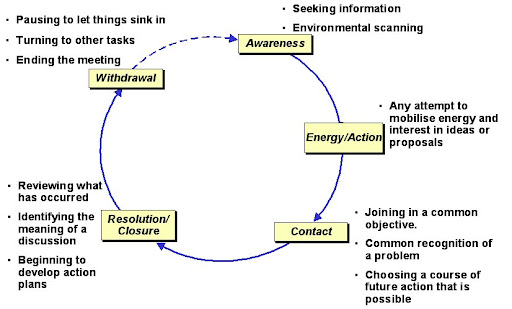
The Gestalt Cycle of Awareness — a model from Gestalt therapy helped me to understand how we move from sensing a need to take meaningful action, and therefore where 'procrastination' can most meaningfully show up.
- Here’s how the cycle works:
Where Procrastination Can Show Up
Procrastination often disrupts the cycle in the early or middle stages:
- Awareness: “I know something’s bothering me, but I’m avoiding it.”
- Mobilisation: “I can’t find the energy or headspace." or "I want to do the thing... but can't get going"
- Action: “I know what I should do… I just can't seem to take it.”
Understanding this changed everything for me I could see where I was getting stuck with setting up my business and I was able to think about the steps I needed to take to get started wtih more compassion, clarity, and progress.
So What Helped Me Move Forward?
- Break things down to micro-steps
- Use visual tools, timers, or body doubling
- Focus on completion, not perfection
- Celebrate tiny wins
- Name the emotion, not just the task
- Create low-pressure accountability
You’re Not Lazy. You’re Wired Differently — And That’s OK.
Whether you’re navigating burnout, perfectionism, ADHD, autism, or just trying to do too much with too little…
Know this: Procrastination is not a personal flaw. It’s often your nervous system asking for safety, space, or support.
Let’s stop pathologising productivity — and start making room for honesty, neurodiversity, and human need.
Question: "How do we distinguish between a 'performance issue' (laziness) and 'executive dysfunction' (neurological wiring) when a critical compliance deadline is missed?"
Answer: We stop looking at the output and start looking at the process. Laziness is a choice to avoid effort; executive dysfunction is an inability to bridge the gap between "knowing" and "doing." If an employee can explain the task perfectly but cannot start it, it is a wiring issue. The solution is not a disciplinary warning, but a "body doubling" session or breaking the task into "micro-steps" to lower the barrier to entry.
2. The "Safety and Disclosure" Question
Question: "If procrastination is a 'nervous system asking for safety,' how do we create an environment where employees feel safe enough to admit they are stuck before it becomes a breach?"
Answer: We move from a culture of "perfectionism" to a culture of "early flagging." We normalize the Gestalt Cycle of Awareness by asking in check-ins: "Where are you in the cycle? Are you in Awareness (knowing it needs doing) or Mobilisation (finding the energy)?" By naming the stage, we remove the shame of the delay, allowing the organization to provide support before the "Action" phase fails.
Frequently Asked Questions
1. How can we maintain high standards if we are 'making room' for neurodiversity and fluctuating emotional states?
Consistency is achieved through scaffolding, not pressure. We build "neuro-inclusive" SOPs that include visual checklists, automated timers, and clear "definition of done" (completion) rather than "perfect." By focusing on "completion over perfection," we ensure the AEO requirements are met reliably without the paralysis that comes from vague, high-pressure goals.
2. How does 'low-pressure accountability' work in a high-stakes regulatory environment?
High-pressure accountability uses fear (e.g., "If this isn't done, we lose our status"), which paralyzes the neurodivergent brain. Low-pressure accountability uses connection. This means frequent, 5-minute "stand-ups" or "check-ins" where the goal isn't to judge progress, but to "name the emotion" or obstacle. It’s the difference between a "policeman" approach and a "co-pilot" approach.
3. What is the single most important change a leader can make to support a team struggling with burnout or executive dysfunction?"
Stop pathologizing productivity. Leaders must stop viewing a slow start as a character flaw. Instead, they should lead with "compassion and clarity" by helping the employee set "micro-goals." When a leader celebrates a "tiny win"—like simply starting a difficult report—they rebuild the employee's self-trust, which is the engine of long-term productivity.
4. How can we use the Gestalt Cycle to improve our project planning?
Most organisations jump straight to "Action." We should build in a formal "Mobilisation" phase. This is the time for teams to process the "Fear" or "Self-Doubt" associated with a new project. By acknowledging the emotional weight of a task early on, we prevent the "smokescreen" of procrastination from appearing later in the project life cycle.